

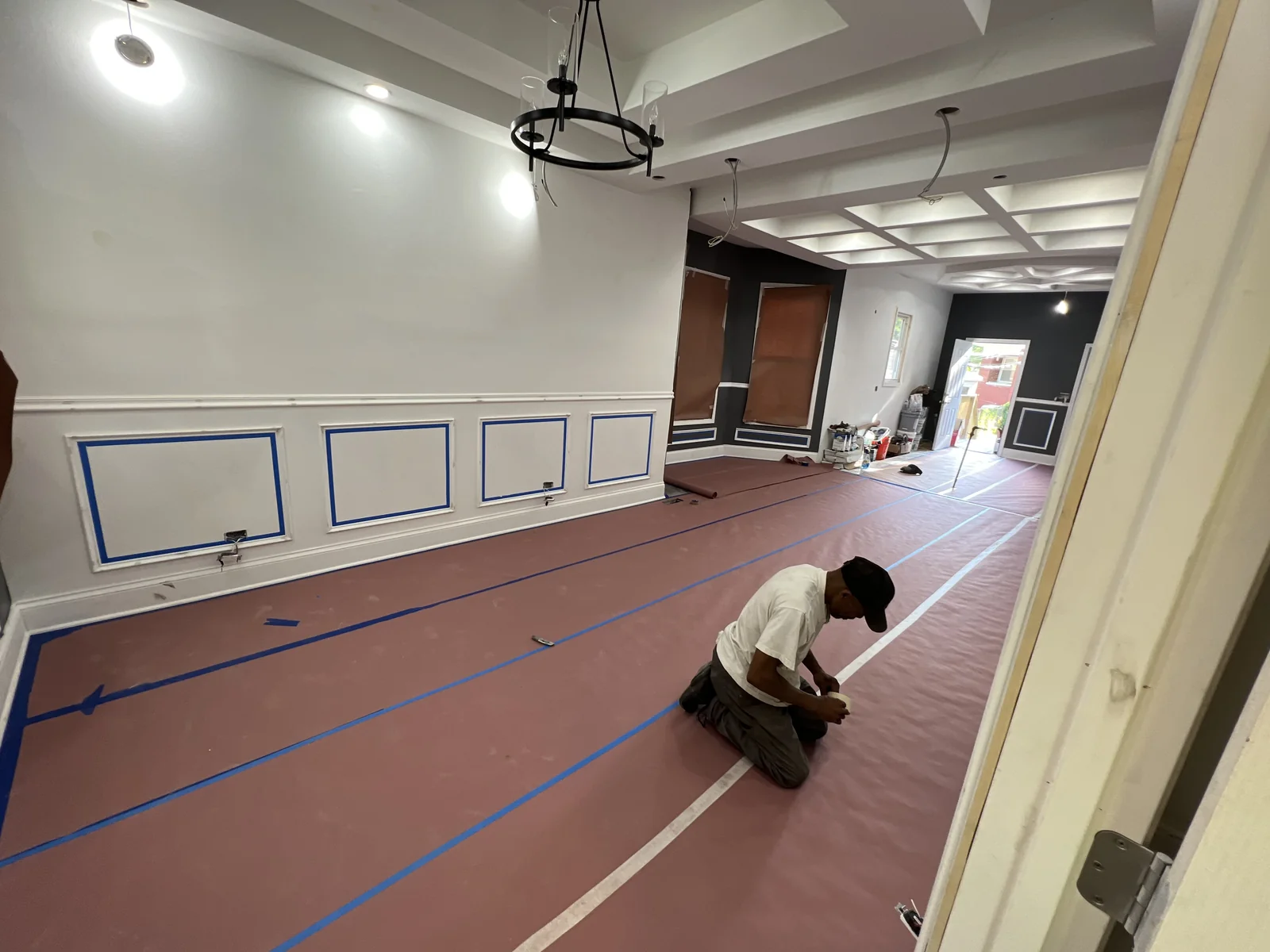
A full gut rehab is the most transformative — and most misunderstood — project in Chicago residential construction. Take a building down to its studs, replace every system, and rebuild it into something that lives like new construction while keeping the bones that made it worth saving. The question every owner and investor asks first: what does that actually cost? The honest answer is a range, and the range is wide for good reasons. Here is how it breaks down.
The Honest Range: $100,000 to $250,000
A full single-unit gut rehab in Chicago runs $100,000 to $250,000, and where you land inside that range is driven by two things: the size of the building and the level of finish. A standard-finish gut on a typical single-family or unit commonly lands in the $100,000–$160,000 band. Push toward high-end finishes, custom millwork, and larger square footage, and the number climbs toward $250,000 and occasionally beyond.
The reason the range is so wide is that "gut rehab" describes a method, not a scope. Two projects that both start with an empty shell can finish tens of thousands of dollars apart depending on what goes back in. That is why a real estimate is always a written, line-item scope — never a per-square-foot guess. Per-square-foot math is how out-of-town investors get burned in this city.
A gut rehab priced as one lump sum tells you nothing. A line-item scope shows you exactly where every dollar goes — and it is the only way to compare bids honestly or catch what a cheaper bid quietly left out.
Where the Money Actually Goes
Roughly speaking, the budget divides into three big buckets:
- The systems behind the walls — new electrical, plumbing, and HVAC. The foundation of the number and the part nobody sees once the drywall goes up. In pre-1930 Chicago buildings this is where the surprises live: knob-and-tube wiring, failing cast-iron drain stacks, and undersized service all have to go, and they are not optional.
- The structure and envelope — framing changes to open up a floor plan, a new engineered beam where a wall comes out, insulation, windows, and roofing if needed. This is where "opening up" a chopped-up greystone or two-flat earns its cost, and where the value shows up on the appraisal.
- The finishes — kitchen, baths, flooring, tile, trim, paint, fixtures. The part you actually see, and the widest cost swing of all. The same rebuilt kitchen can be a clean rental-grade install or a custom showpiece, and that difference is the single biggest lever on your final number.
The Two-Flat Question
A complete two-flat gut is a different animal. You are rebuilding two full units plus the common systems that serve them, so the number starts higher and climbs from there. A full two-flat gut rehab in Chicago starts around $150,000–$165,000 and frequently runs well past $200,000 depending on unit sizes, finish level, and how much structural work the building needs.
For investors, that higher number is often the better deal. Two income units, one mobilization, one permit process, and a building that appraises and rents as a fully modernized two-flat. It is the play that turns a tired frame building into a genuine cash-flowing asset — and it is exactly the kind of project our West Englewood gut rehab was built around.
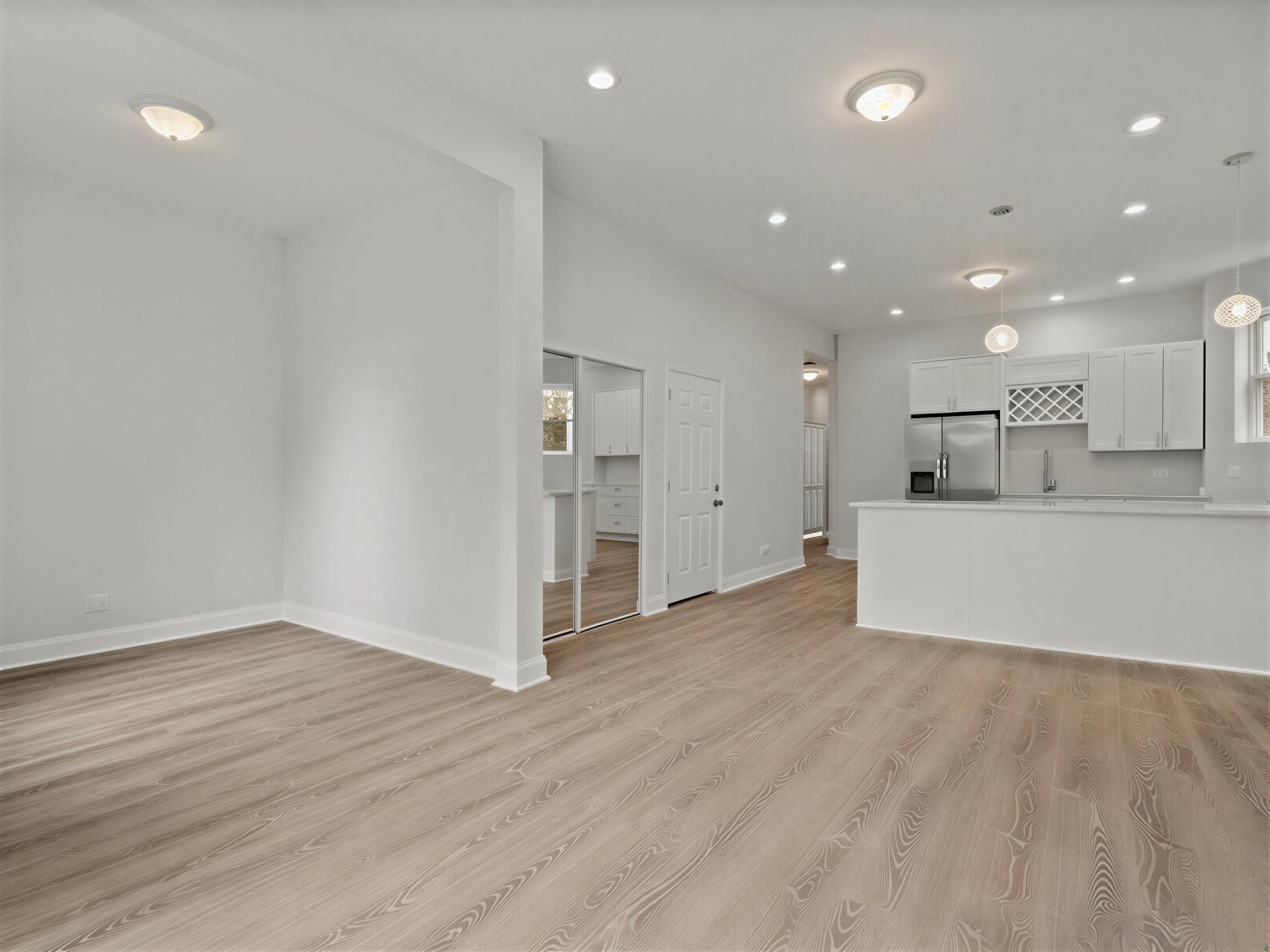 An open main floor after a full gut — the reconfigured layout is where much of the value is created.
The Chicago-Specific Costs
Two line items catch people off guard in this market. The first is permits and plan review. A gut rehab is not an Easy Permit job — it requires full plan review, architectural drawings, and inspections at every phase. Budget for city fees plus a design cost, and know that the permitted, inspected path is the only one that protects your appraisal, your insurance, and your resale.
The second is the century-old building tax — the cost of what you find once the walls are open. A cracked foundation, a rotted joist, a buried oil tank, galvanized supply lines fused solid with mineral scale. This is why every honest gut rehab estimate carries an explicit contingency line. On a full gut, surprises are not a question of if but how many, and a contractor who priced the job with zero contingency either missed something or is planning to make it up in change orders.
Ask any contractor how they handle what they find behind the walls. If the answer isn’t "a written contingency, agreed up front," you’re looking at a bid that gets more expensive after you’ve signed.
On a full gut, surprises are not a question of if — but how many.
How to Budget Smart
Start with the range, then narrow it with a few decisions that actually move the number:
- Set your finish level early. It is the difference between the bottom and top of a six-figure range — decide it before you shop for bids, not after.
- Price to the plan. Investors should underwrite at a realistic finish for the rents they expect: rental-grade for a hold, a step up for a sale.
- Carry contingency on top, not inside. Your number should have room for what the walls hide — layered onto the estimate, not quietly absorbed into it.
- Insist on a phased scope with a draw schedule. Milestone-based draws protect your money, keep the project honest, and give you a document you can hold a contractor to.
A gut rehab is the biggest construction decision most people ever make — the estimate should read like it.

Build Smarter.
Stay Informed.
Practical Chicago renovation insight — costs, permits, and what we’re learning on real job sites. No spam, unsubscribe anytime.
We’ll confirm your subscription by email.
Almost there — your email app just opened. Hit send and you’re on the list.
Planning a project?
Tell us what you’re thinking — we’ll follow up within 24 hours with a free line-item estimate.