

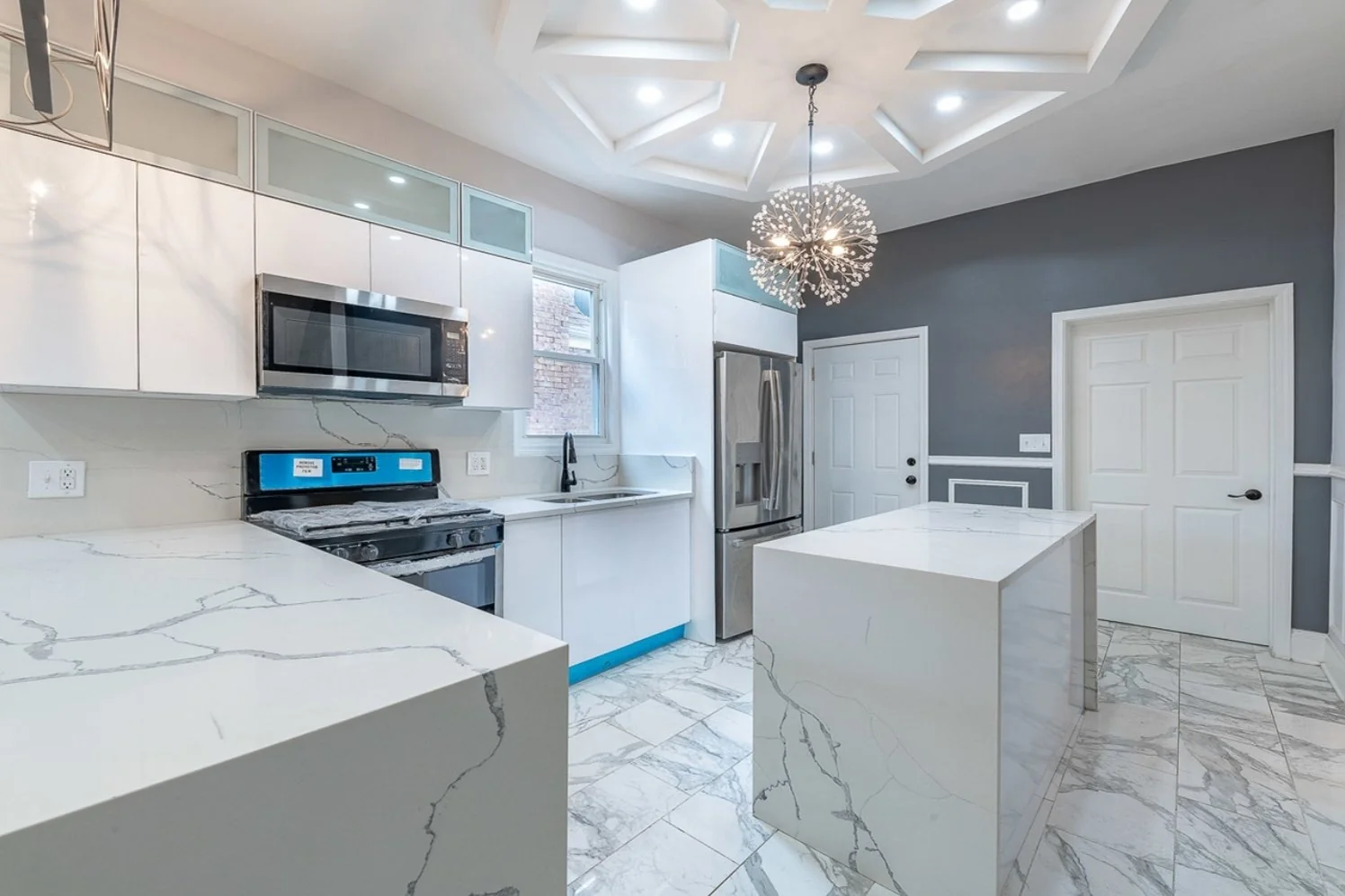
Ask three contractors what a kitchen remodel costs in Chicago and you'll get three numbers that are tens of thousands of dollars apart. None of them are necessarily lying — they're just describing different projects. Here's how the money actually breaks down, so you can read any bid and know exactly what you're looking at. (When you're ready for real numbers, our free line-item estimates show every figure below.)
When Refacing Makes Sense
Refacing keeps your existing cabinet boxes and layout, and replaces everything you actually see: new doors, drawer fronts, matching veneer on the frames, and fresh hardware. In Chicago, a typical refacing job runs $5,000–$12,000 depending on kitchen size and door style. It’s the right call when three things are true: the boxes are structurally sound, the layout already works for you, and the goal is a visual reset rather than a rebuild.
Where people go wrong is refacing around problems. If the boxes are sagging particle board, if drawers are failing, or if the layout fights you every time you cook — refacing puts a new face on the same frustrations. You’ll spend real money and still have the old kitchen underneath.
When Full Replacement Is the Smarter Spend
Replacement means new cabinet boxes — stock or semi-custom lines — and it’s the sweet spot for most Chicago kitchens at $10,000–$30,000 installed. Stock cabinets come in fixed sizes and finishes and keep the budget tight. Semi-custom opens up sizing tweaks, more finishes, and better interior hardware — soft-close everything, deep drawer banks, pantry pull-outs — without the full custom price.
Replacement is also the moment to fix the layout: moving the range, adding an island or peninsula, or opening a wall. Once new boxes are going in anyway, layout changes cost far less than they would as a standalone project later. That’s why most of our full kitchen remodels pair semi-custom cabinets with a layout rework — it’s where the value concentrates.
Cabinets typically run 30–40% of a full kitchen budget. If a kitchen bid seems too good to be true, the cabinet line is usually where the corners got cut — thin boxes, stapled drawers, doors that won’t survive a decade of use.
When Custom Is Actually Worth It
Custom cabinetry — built to order, any dimension, any finish — starts around $30,000 and climbs with scope. In most kitchens it’s not necessary. Where it earns its price: old Chicago housing stock with walls that aren’t square and corners that aren’t 90 degrees, unusual ceiling heights, integrated paneled appliances, or a specific design vision that stock sizes can’t deliver.
In a greystone or a century-old two-flat, custom (or a skilled carpenter scribing semi-custom to the walls) is often the difference between cabinetry that looks built-in and cabinetry that looks dropped in. That’s a craftsmanship call as much as a budget one — see our custom cabinetry & built-ins work for what that looks like in practice.
What Moves the Price in Chicago
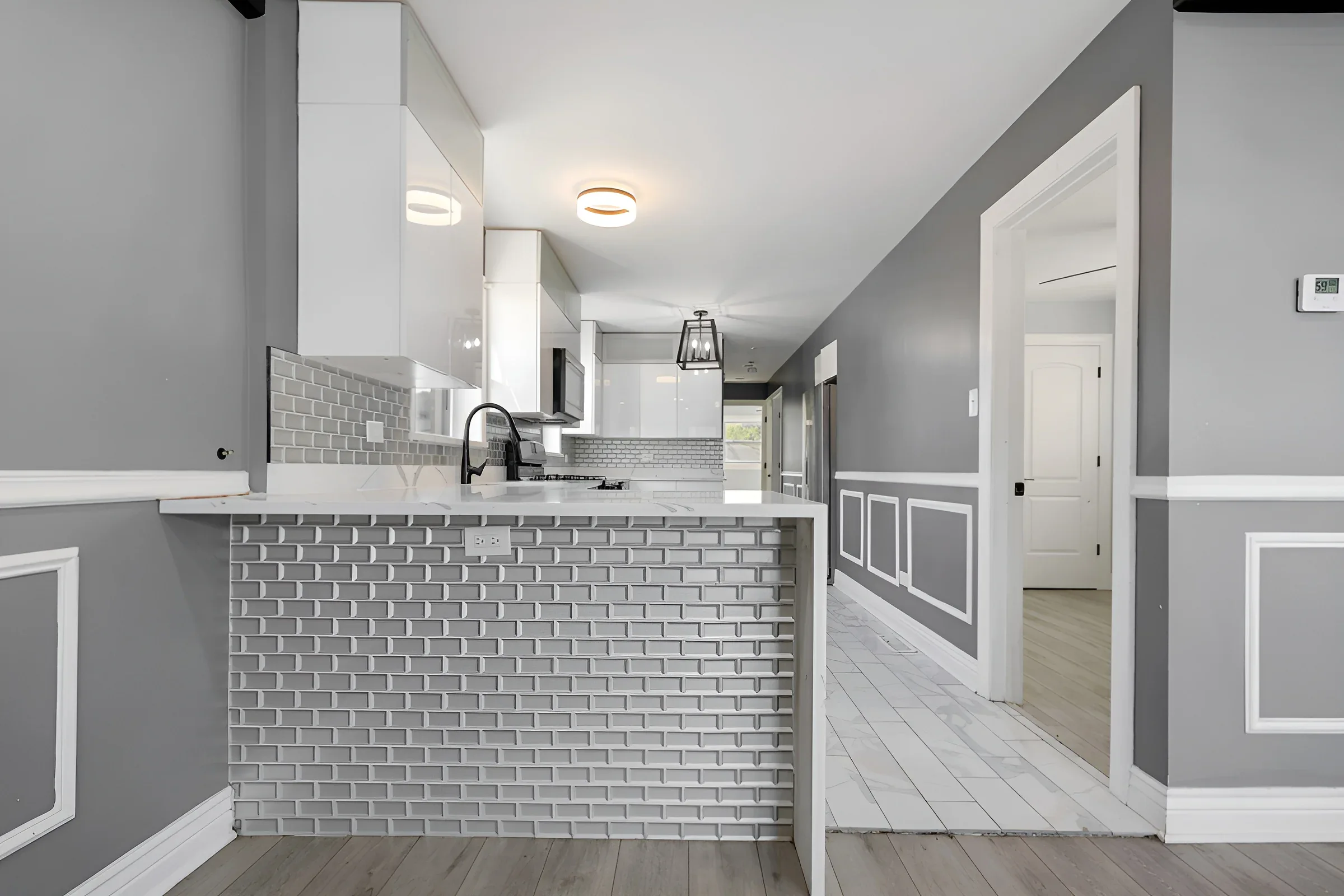
Three factors swing cabinet budgets more than anything else. Door style and finish: painted shaker runs more than stained flat-panel because of the finishing labor; high-gloss and specialty finishes more still. Interior hardware: soft-close hinges, undermount drawer glides, and organizers add up fast across 20+ openings. Installation conditions: out-of-level floors and out-of-plumb walls in older buildings add scribe-and-shim labor that flat new-construction walls don’t need — one more reason the installer matters as much as the box.
How to Decide
Ask three questions in order. First: do the boxes and layout genuinely work? If yes, refacing is on the table. Second: is the layout the real problem? Then replacement with a layout fix beats cosmetics every time. Third: is the space itself unusual — old walls, odd dimensions, a design that stock can’t hit? That’s custom territory. And whichever path you take, get the cabinet line itemized: brand, box construction, door style, hardware, and installation as separate numbers you can compare. For how cabinets fit the full budget, see what a kitchen remodel really costs in Chicago.
Planning a project?
Tell us what you’re thinking — we’ll follow up within 24 hours with a free line-item estimate.