


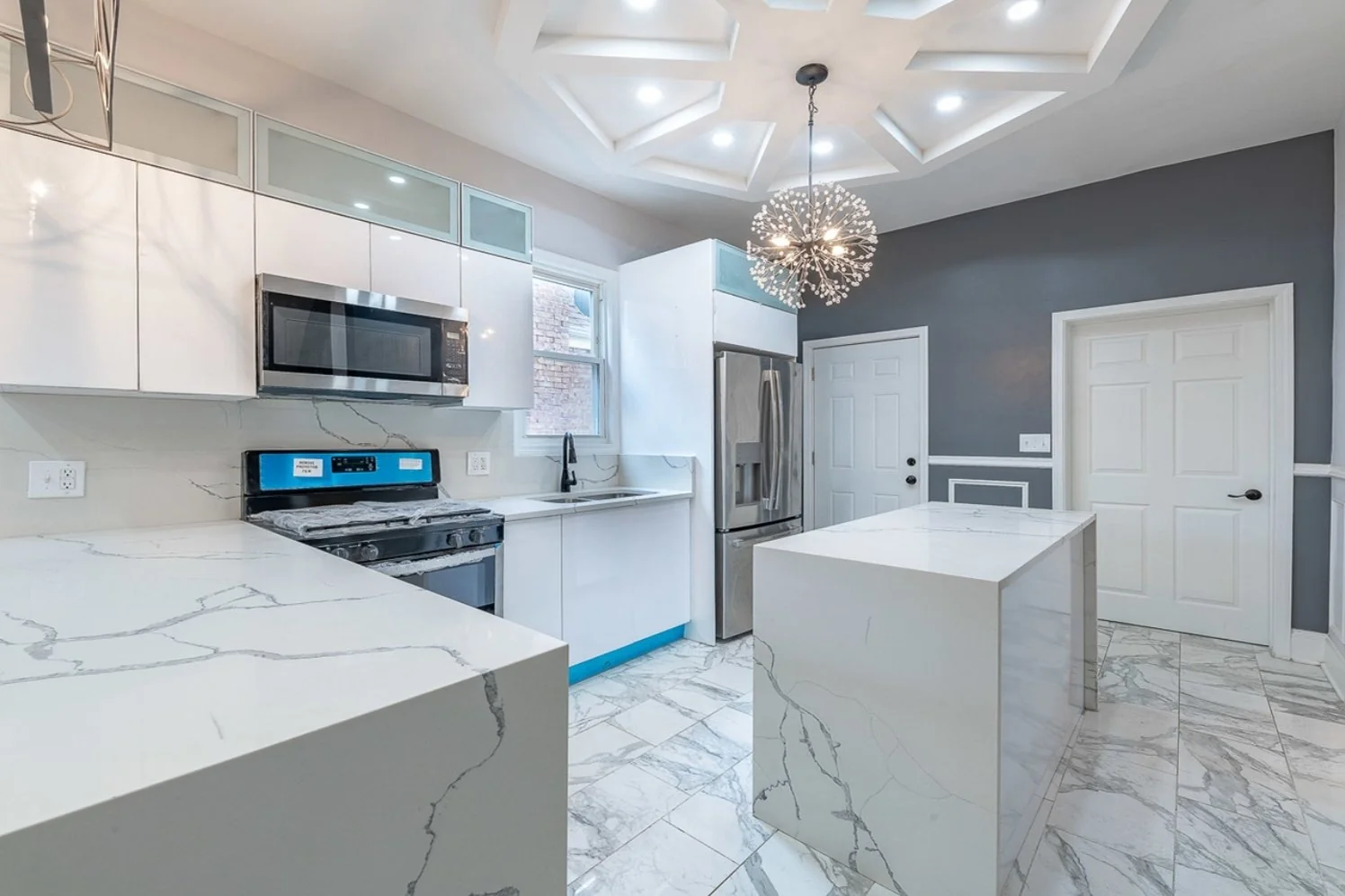
Every month, investors walk two-flats and bungalows across Chicago’s South and West Sides running the same math: purchase price plus rehab against after-repair value and rent. The purchase price is public. The rent is researchable. The rehab number is where deals are actually won or lost — and it is the number most investors get from a contractor who has never built for the strategy. Here is how we price it, from a GC whose completed gut rehabs in Englewood, West Englewood, and Fuller Park are exactly this play.
What Does a BRRRR Rehab Cost in Chicago?
Budget by exit, not by room count: a rental-grade unit refresh runs $25,000–$60,000 per unit, a full gut of a single-family or single unit runs $100,000–$160,000 at standard finishes, and a whole-building two-flat gut runs $150,000–$250,000+. Which band you are in comes down to what the building needs behind the walls, not what the listing photos show.
Rental-grade refresh ($25K–$60K per unit). The classic value-add: kitchen, bath, flooring, paint, fixtures — durable mid-grade finishes, systems left alone because they still work. This is the band for a structurally sound building with tired units, and it is where the refinance math is usually strongest.
Full gut, single unit or single-family ($100K–$160K). Down to the studs: new electrical, plumbing, HVAC, insulation, and a rebuilt floor plan. This is the band for buildings with knob-and-tube, failed stacks, or layouts the rental market will not pay for. Our breakdown of what a full gut rehab really costs goes line by line.
Whole-building gut ($150K–$250K+). Both units of a two-flat plus the shared systems — the play that turns a distressed building into a 30-year asset. Our two-flat renovation guide covers why these buildings price differently than two single-family rehabs stacked on top of each other.
Before you write an offer, run the numbers through our free Chicago deal analyzer — cash-on-cash, cap rate, and DSCR computed from your actual purchase, rehab, and rent assumptions instead of a rule of thumb.
What Is the Difference Between a Rental-Grade and a Retail-Grade Rehab?
The spec sheet — and it can swing the same scope by 30–40%. A rental-grade rehab uses finishes chosen for durability and replacement cost: LVP instead of site-finished hardwood, quartz remnant or laminate counters, stock cabinetry, standardized fixtures you can swap in an afternoon when a tenant moves out. A retail-grade rehab — the flip spec — buys what photographs well and appraises high: hardwood, tile to the ceiling, semi-custom cabinets, the light fixtures buyers remember.
Here is the contrarian part: over-improving a rental is one of the quietest ways investors lose money in this market. The tenant paying market rent in Englewood does not pay a premium for the backsplash, but you paid for it — and you will pay to protect it. We scope to the exit you name. If you are refinancing and holding, we build rental-grade and your budget goes into the systems that prevent 2 a.m. phone calls. If you are selling to an owner-occupant, we build what the comps reward. Mixing the two specs is how a $45,000 budget becomes $70,000 with no additional rent to show for it.
Does the 70% Rule Actually Work in Chicago?
As a first-pass screen, yes. As a budget, no. The rule — pay no more than 70% of after-repair value minus rehab costs — was built for markets with smooth, predictable comps. Chicago is a city of block-by-block appraisal ceilings: the same finished two-flat can appraise $60,000 apart depending on which side of a park it sits on, and the refinance that makes BRRRR work depends entirely on that appraisal.
Two Chicago-specific corrections. First, run ARV from closed comps on the subject block, not the neighborhood average — your lender’s appraiser will. Second, the rehab number in your formula has to be a real line-item scope, not a per-square-foot guess. A wholesaler’s “needs $40K” and a contractor’s written scope for the same building routinely differ by half, and the gap is always in the systems: the stack, the service, the roof you cannot see from the street.
What Do Holding Costs Add While You Renovate?
Real money that never shows up in the rehab budget — which is why timeline is a cost category, not a preference. While the building sits empty you are carrying property taxes, insurance at vacant-building rates, utilities for the crew, and — if you bought with hard money — interest that compounds the pain of every idle week. On a typical leveraged purchase, each month of hold commonly runs four figures before a wall is painted.
The schedule levers that actually move it: order long-lead items the day the scope is signed (cabinets run 4–8 weeks and stall more projects than any trade does), file permits immediately because Chicago plan review has its own clock, and sequence trades so the building never waits on a decision you could have made in week one. A contractor who self-performs core trades is not just cheaper per hour — it is fewer hand-offs, and hand-offs are where weeks disappear.
How Do Rehab Loan Draws Work With a Contractor?
Your lender releases money against completed work, verified by inspection — so your contractor’s paperwork is part of your financing. Hard-money and renovation lenders fund in draws: an initial advance, then staged releases as demo, rough-in, and finishes are verified. Two things make that machinery run smoothly. First, a line-item scope — the lender’s inspector checks completed line items against the budget, so a lump-sum bid is not just bad practice, it is literally incompatible with how your loan pays out. Second, invoicing that tracks progress: we bill against completed stages, which lines up with how draw schedules release funds instead of fighting them.
Every LSPC estimate is already a written line-item scope with explicit contingency — the same document your lender underwrites from and the same one that keeps change orders honest mid-project.
What Should a Pre-Purchase Walkthrough Catch?
The four things that blow up rehab budgets after closing: the stack, the service, the structure, and the city. We walk buildings with investors before they close, and the list is remarkably consistent. The plumbing stack — century-old cast iron in most pre-war buildings — either has life left or it does not, and replacing it moves you a full budget band. The electrical service: knob-and-tube cannot legally be extended, so a “cosmetic” rehab that touches it stops being cosmetic. The structure: settled foundations and cut joists from previous owners’ remodels. And the city: open building violations at the address block new permits until they are resolved — a surprise that has stalled more closings than any inspection finding, because the violation belonged to the seller and now it is yours.
Fifteen minutes in a basement with someone who knows what Chicago buildings hide is worth more than any spreadsheet assumption. It is also free to ask for.
BRRRR Rehab FAQs
How much should I budget per unit for a rental rehab in Chicago? $25,000–$60,000 per unit for a rental-grade refresh of kitchen, bath, flooring, and paint with systems left in place. Buildings that need electrical, plumbing, or HVAC replaced move into gut territory at $100,000–$160,000 per unit.
What finishes should a BRRRR rehab use? Rental-grade: LVP flooring, stock cabinetry, quartz or laminate counters, standardized fixtures. Durable, replaceable, and priced for the rent the unit actually commands — the appraiser rewards clean and functional far more than premium.
Can a contractor work with my hard-money lender’s draw schedule? Yes — the requirements are a line-item scope the inspector can verify against and progress-based invoicing. Both are standard on every LSPC project.
Should I renovate with tenants in the building? Unit-by-unit, yes — it is the standard two-flat play. Shared-system work requires scheduled shutoffs and proper notice. The details are in our two-flat guide.
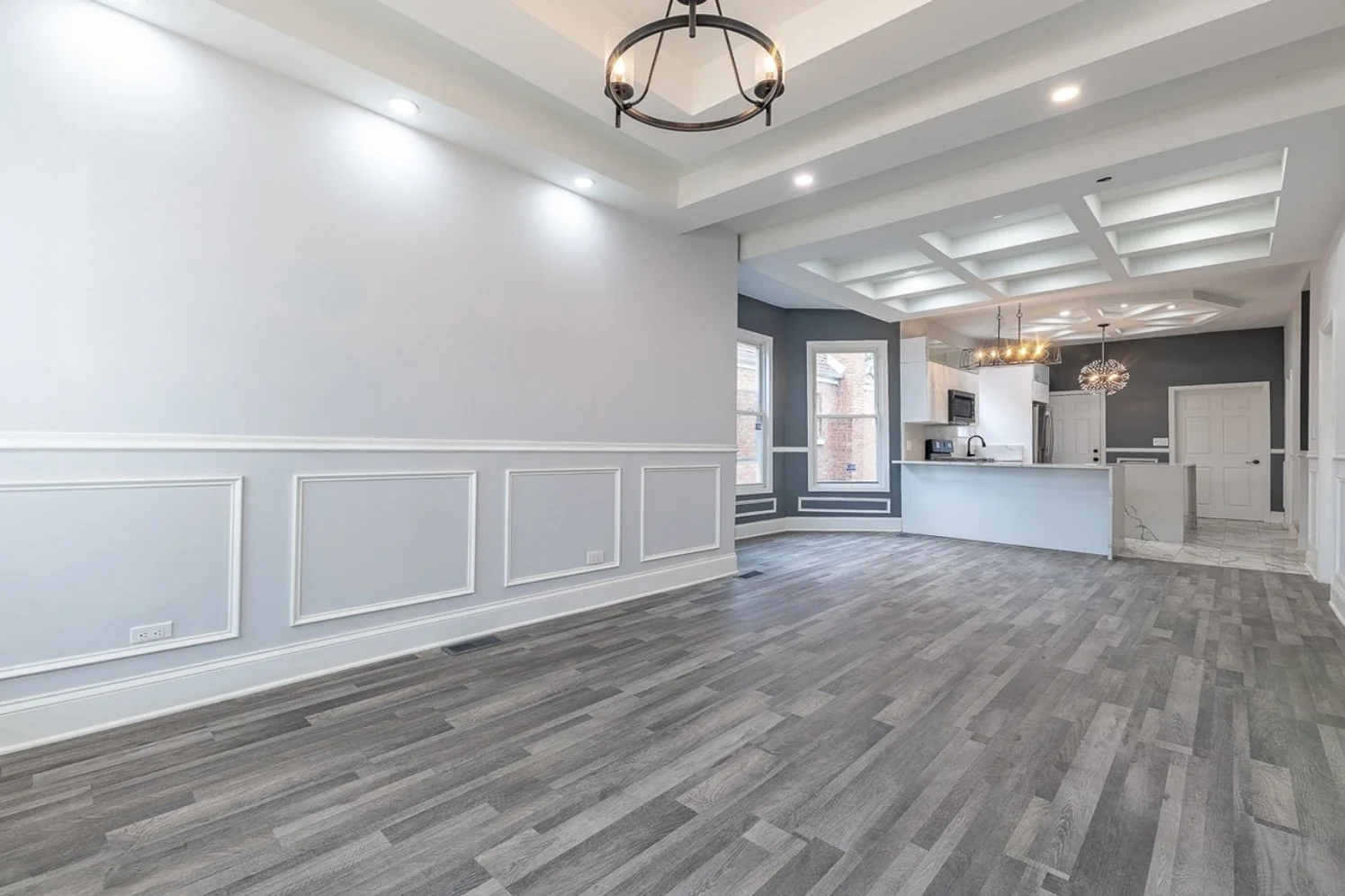
How do I know a rehab estimate is real before I close? Walk the building with the contractor before you buy, get the scope in writing line by line, and check the address for open violations. See our completed West Englewood gut rehab for what the full play looks like finished, then get a free line-item estimate on yours.
Build Smarter.
Stay Informed.
Practical Chicago renovation insight — costs, permits, and what we’re learning on real job sites. No spam, unsubscribe anytime.
We’ll confirm your subscription by email.
Almost there — your email app just opened. Hit send and you’re on the list.
Planning a project?
Tell us what you’re thinking — we’ll follow up within 24 hours with a free line-item estimate.